Can Christians Remarry After Divorce? What Does the Bible Say?
Here’s the short answer I give every person who sits across from me with this question: yes, the Bible allows remarriage after divorce in specific, well-defined circumstances — but it never treats remarriage as a default right, and it never skips the step of examining your heart first. If you take one thing from this guide, take that.
I’ve spent more than 30 years as a pastor, marriage counselor, and law degree holder, and no question sends more people into my office with shaking hands than this one. They’ve usually already Googled it a dozen times. They’ve read three different blog posts that contradict each other. And they still don’t know what to do with their own life.
So I’m not going to give you a Sunday-school answer. I’m going to walk you through what Scripture actually says, what the major Christian traditions teach, and how I help people make this decision with a clear conscience instead of guesswork.
What Does the Bible Say About Remarriage?
The Bible treats marriage as a permanent covenant, but it also acknowledges that divorce happens in a fallen world — and it addresses remarriage directly in several passages rather than leaving it to guesswork.
The core texts are Matthew 19:9, Matthew 5:32, Mark 10:11-12, Luke 16:18, and 1 Corinthians 7:10-15. Jesus states plainly in Matthew 19:9 that divorcing a spouse and marrying another constitutes adultery — “except for sexual immorality.” That exception clause is the hinge on which most of this debate turns. Paul adds another layer in 1 Corinthians 7:15, addressing what happens when an unbelieving spouse abandons the marriage.
Skimmable summary: The Bible doesn’t say remarriage is universally forbidden or universally fine. It sets marriage as a lifelong covenant, then names specific situations — sexual immorality and abandonment by an unbeliever — where the “bond” is treated differently. Everything else in this article builds on those two exceptions.
Can Christians Remarry After Divorce?
Yes, Christians can remarry after divorce when the original marriage ended on biblical grounds — most commonly sexual immorality (Matthew 19:9) or abandonment by an unbelieving spouse (1 Corinthians 7:15) — though Christian traditions differ on how strictly to apply this.
This is the question I get phrased a hundred different ways: “can a divorced Christian marry again,” “am I allowed to date,” “will God be angry with me.” Here’s how I break it down for the people I counsel:
- If your spouse committed adultery and the marriage ended because of it, most evangelical and Protestant theologians agree you’re free to remarry as the “wronged” party.
- If your spouse abandoned you and refused reconciliation, particularly if they weren’t a believer, Paul’s language in 1 Corinthians 7:15 (“not bound”) is widely read as permission to remarry.
- If you initiated the divorce for reasons outside these categories — incompatibility, growing apart, financial stress — the biblical case for remarriage is much weaker, and I tell people that honestly instead of softening it.
I also want to name something most articles skip: there’s a real difference between what’s biblically permissible and what’s spiritually wise. I’ve counseled people who were technically free to remarry but weren’t emotionally or spiritually ready, and rushing that decision cost them a second marriage too.
Skimmable summary: Christian remarriage after divorce isn’t a blanket yes or no — it depends heavily on why the first marriage ended. Adultery and abandonment by an unbeliever are the two grounds most traditions recognize as freeing someone to remarry with a clear conscience.
Is Remarriage a Sin After Divorce?
Remarriage after divorce is not automatically a sin — Jesus and Paul both describe conditions under which it’s permitted — but remarrying outside those biblical grounds is described in Matthew 19:9 as adultery.
This is where I see the most unnecessary guilt. People assume any remarriage after divorce is sin, full stop, and they carry that shame into a new relationship or avoid one entirely out of fear. That’s not what the text says. Jesus is addressing a specific abuse happening in His time — men divorcing wives for trivial reasons (“any cause” divorce, per Matthew 19:3) to marry someone else — and correcting it.
The sin, biblically, is in the reason for the divorce and remarriage, not in remarriage as a category. A believer who was faithfully married, was abandoned or betrayed through no fault of their own, and later remarries is walking in a very different position than someone who manufactures grounds to leave a covenant they simply grew tired of.
I’ll also say this plainly, because I think grace gets lost in these debates: even in situations where a remarriage happened outside the ideal biblical framework — maybe before someone came to faith, maybe out of poor teaching — Romans 8:1 still applies. There is no condemnation for those in Christ. Guilt that never lifts isn’t conviction; it’s something else, and I address that later in the FAQs.
Skimmable summary: Remarriage itself isn’t the sin the Bible warns against — remarrying for the wrong reasons, or divorcing to pursue someone else, is what Jesus calls adultery. Context and motive matter more than the act of remarrying alone.
What Are the Biblical Exceptions That Allow Remarriage?
Two exceptions are named directly in Scripture: the “exception clause” for sexual immorality (Matthew 19:9, Matthew 5:32) and the “Pauline privilege” for abandonment by an unbelieving spouse (1 Corinthians 7:15). A third, less-discussed situation — abuse and endangerment — is addressed by most modern pastoral counselors under the broader biblical principle of protecting life, even though it isn’t named with a specific verse.
Exception | Bible Reference | What It Covers |
Sexual immorality (porneia) | Matthew 19:9; Matthew 5:32 | Adultery or persistent sexual sin by a spouse, freeing the wronged party to divorce and remarry |
Abandonment by an unbeliever | 1 Corinthians 7:15 | An unbelieving spouse who deserts the marriage; the believer is “not bound” |
Abuse or life-threatening danger | Inferred from broader biblical principles (e.g., 1 Timothy 5:8, Exodus 21:10-11) | Physical, sexual, or severe emotional abuse; most pastoral counselors treat ongoing safety as grounds for separation and, often, eventual divorce |
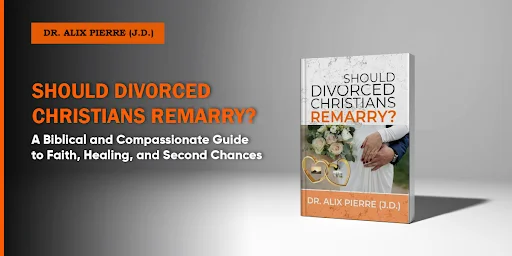
I want to flag something important here: even among Bible-believing pastors, there’s real disagreement on how wide these exceptions stretch. Some hold what’s called the “permanence view” — no remarriage is permitted while a former spouse is alive, no exceptions. Others hold the “exception view,” which is what I’ve outlined above and what I personally teach. I go into far more depth on this — including how I counsel people through applying these exceptions to their own story — in my book, Should Divorced Christians Remarry.
Skimmable summary: The Bible names two explicit exceptions to the no-remarriage principle — adultery and abandonment by an unbeliever — and pastoral practice generally extends a third for abuse. Christian traditions disagree on how strictly these exceptions should be applied.
Bible Verses About Divorce and Remarriage
People ask me to just point them to the verses so they can read them for themselves. Here’s the full list I keep on hand for counseling sessions.
Verse | What It Says |
Marriage is a lifelong, God-joined union: “what God has joined together, let not man separate” | |
Remarriage after divorce is adultery, except in cases of sexual immorality | |
Divorcing a faithful spouse causes them to commit adultery if they remarry | |
Both husband and wife are held to the same standard on divorce and remarriage | |
Restates the adultery principle without listing the exception clause | |
Married believers shouldn’t separate; if they do, remain unmarried or reconcile | |
A believer deserted by an unbelieving spouse is “not bound” | |
Marriage is legally binding until the death of a spouse (used to argue the permanence view) | |
God states He “hates divorce,” reflecting His heart for covenant permanence | |
Old Testament regulation permitting divorce documents, referenced by Jesus as a concession, not a command |
Notice that these verses don’t all point in the exact same direction — that’s precisely why sincere, Bible-believing Christians land in different places on this. I’ve found the most peace, and helped the most couples find peace, by reading Matthew 19 and 1 Corinthians 7 together rather than isolating one verse.
Skimmable summary: Ten key passages form the biblical basis for the entire divorce-and-remarriage debate. Matthew 19:9 and 1 Corinthians 7:15 carry the most weight for the exception view; Romans 7:2-3 and Mark 10:11-12 anchor the permanence view.
How Do I Know If I’m Free to Remarry as a Christian?
I don’t hand people a yes-or-no answer in one sitting — I walk them through the same six-step process every time, and I’m laying it out here so you can work through it yourself before you ever sit across from a pastor.
Step 1: Identify the biblical grounds for your divorce
Be honest about why your marriage ended. Was there adultery? Abandonment? Abuse? Or did the marriage end for reasons the Bible doesn’t specifically address as grounds — like emotional distance or incompatibility? Your answer here shapes everything that follows.
Step 2: Examine your own role and repentance
Even if you were the “wronged” party, take time to genuinely examine whether you contributed to the breakdown, and repent of anything you find. This isn’t about earning permission — it’s about entering a new marriage without unresolved baggage.
Step 3: Read the primary texts yourself, slowly
Don’t rely on secondhand summaries. Read Matthew 19:1-12 and 1 Corinthians 7 in full, more than once, ideally in two or three translations.
Step 4: Seek pastoral counsel from someone who knows your story
A verse on a screen can’t account for the specifics of your marriage. I’ve changed my counsel to individuals after hearing the full context of their situation — something no blog post can do for you.
Step 5: Test the new relationship, don’t just test the theology
If you’re already considering someone specific, ask whether this relationship started before or after your divorce was final, whether it played any role in the marriage ending, and whether it’s built on healing or on escape.
Step 6: Move forward with peace, not fear
Once you’ve done the work above, don’t let lingering anxiety substitute for discernment. Colossians 3:15 tells believers to let the peace of Christ “rule” in their hearts — that’s meant to be a real decision-making filter, not just a comforting phrase.
Skimmable summary: Determining whether you’re free to remarry as a Christian is a process, not a single verse lookup — it requires identifying your biblical grounds, doing honest self-examination, studying Scripture directly, getting pastoral input, and testing the new relationship before moving forward.
Can a Divorced Christian Marry Again Across Different Christian Traditions?
Yes, but how a divorced Christian can marry again — and whether the church will perform or bless that marriage — varies significantly by tradition, from Catholic annulment requirements to more permissive Protestant and evangelical approaches.
Tradition | General Position | Key Mechanism |
Roman Catholic | Marriage is sacramentally indissoluble; remarriage while a spouse lives is not recognized unless the first marriage is annulled | Annulment (declaration the first marriage was never valid) |
Eastern Orthodox | Marriage is ideally permanent, but the church permits limited remarriage through pastoral economy (oikonomia) | Up to two additional marriages permitted with a penitential rite |
Mainline Protestant | Generally permits remarriage, often without requiring proof of specific biblical grounds | Pastoral discretion, denominational policy |
Evangelical / Non-denominational | Widely applies the exception view (adultery, abandonment) as grounds for remarriage; practice varies by individual church | Pastoral counseling and elder review |
Permanence-view churches | Teach no remarriage is permitted while a former spouse is alive, regardless of the reason for divorce | Church discipline or membership requirements around remarriage |
If you’re navigating this within a specific denomination, the honest advice I give people is: talk to your own pastor or priest before you talk to the internet. Denominational policy on remarriage often affects real, practical things — whether your wedding can happen in your home church, whether you can serve in ministry afterward, whether your new marriage will be formally recognized.
Skimmable summary: Christian denominations don’t apply a single, uniform rule on remarriage. Catholics require annulment, Orthodox churches allow limited remarriage through pastoral economy, and most Protestant and evangelical churches apply some version of the biblical exception view — so your own church’s specific policy matters as much as the general biblical principle.
What Should You Consider Before Remarrying After Divorce?
Beyond the theological question, there are practical realities I walk every client through before they set a new wedding date.
- Your children’s stability. A new marriage reorganizes a child’s entire world. I ask people to think through custody dynamics, blended-family adjustment, and timing before announcing anything.
- Financial entanglements from the first marriage. Alimony, shared debt, and property settlements can complicate a new marriage legally and emotionally — this is where my law background comes in during counseling.
- Unresolved grief or anger. If you haven’t grieved the first marriage, you’ll bring that grief into the second one. I’ve seen this sink otherwise solid second marriages.
- Premarital counseling, again. Don’t skip it the second time around. In fact, I’d argue it matters more the second time, because both people are bringing a full history into the room.
- Your church community’s response. Know ahead of time how your church will respond, so you’re not blindsided during what should be a joyful season.
If you’re still in the “before I remarry” stage entirely — meaning you haven’t walked down the aisle even once yet, or you’re rebuilding after a divorce and thinking hard about what you want differently next time — I’d point you to 17 Things to Know Before Getting Married, which covers the groundwork I wish more couples laid the first time.
Skimmable summary: The decision to remarry involves more than settling the theological question — children, finances, unresolved grief, premarital counseling, and your church community all factor into whether remarriage will actually work, not just whether it’s permitted.
My Take on Christian Divorce and Remarriage After 30 Years of Ministry
I’ll be direct with you: I hold the exception view, not the permanence view. I believe Matthew 19:9 and 1 Corinthians 7:15 mean what they say, and I’ve watched too many genuinely faithful believers carry decades of unnecessary shame because someone told them remarriage was categorically off the table.
At the same time, I’ve watched the exception view get abused just as often — people stretching “sexual immorality” or “abandonment” to cover situations that don’t fit, because they wanted permission more than they wanted truth. Neither extreme serves people well.
Here’s a number that stuck with me: according to Barna Group’s most recent research, 58% of Christians who’ve been divorced say they’ve remarried. That means most of the people reading this aren’t asking a hypothetical question — they’re standing at a real decision point, or they already made it and are looking for peace about it. My goal with every person I counsel, and with everything I’ve written on this topic, including my book on it, is to help them get there with their eyes open and their conscience clear — not rushed, not shamed, just clear.
Skimmable summary: After three decades in pastoral ministry, I teach the exception view of remarriage — grounded in Matthew 19:9 and 1 Corinthians 7:15 — while cautioning against both needless guilt and convenient rationalization. Most divorced Christians do go on to remarry, which makes getting this decision right a real, practical priority, not just a theoretical debate.
If this is a decision you’re actively working through, I unpack it in far more depth — with more of the real counseling stories behind these principles — in my book Should Divorced Christians Remarry. And if you’re looking to build something healthier this time around, I’ve also written on what to know before getting married and what it takes to become a stronger, more grounded Christian heading into this next Blog.
Frequently Asked Questions
Can a divorced Christian marry again in church?
Yes, in most Protestant and evangelical churches, though Catholic churches typically require an annulment first. I’ve officiated remarriages for members of my own congregation after walking through their situation with them individually — it’s common, but it’s not automatic everywhere, so check your specific church’s policy before assuming.
Is remarriage after divorce always considered adultery?
No — Jesus names an exception for sexual immorality in Matthew 19:9, and Paul adds a second exception for abandonment by an unbeliever in 1 Corinthians 7:15. I had a client years ago who assumed her remarriage automatically made her “an adulterer” for life because a well-meaning relative told her so. Once we worked through the actual text together, and the fact that her ex-husband’s infidelity was well-documented, that weight lifted almost immediately.
What does the Bible say about remarriage for the innocent party in a divorce?
The innocent party — meaning the spouse who didn’t cause the marriage to end through adultery or abandonment — is widely understood by exception-view theologians to be free to remarry. I’ve seen this distinction matter enormously in counseling: someone who was faithfully committed and betrayed carries a very different biblical standing than someone who walked away for lesser reasons.
Can I remarry if my ex-spouse remarries first?
Some theologians argue that a former spouse’s remarriage effectively finalizes the end of the covenant, freeing the other party as well, though this isn’t stated explicitly in Scripture and remains debated. I generally counsel people not to build their entire decision around what their ex does — build it on your own biblical grounds and your own readiness.
Does God forgive remarriage if it happened outside biblical grounds?
Yes — 1 John 1:9 promises forgiveness for those who confess, and that includes marriage decisions made before someone understood Scripture or before they came to faith. I’ve sat with people who remarried decades ago, long before they ever opened a Bible, and carried guilt about it for years. The gospel doesn’t ask you to undo a marriage; it asks you to walk faithfully in the one you’re in now.
What if I got divorced and remarried before I became a Christian?
Most pastors, myself included, treat a marriage entered before conversion as your current, legitimate marriage going forward — the call is to be faithful in it now, not to dissolve it. I’ve never counseled someone to leave a second marriage because it predated their faith; that would create far more harm than the original decision did.
Should I get my pastor's approval before remarrying?
It’s not always legally or theologically “required,” but I strongly recommend it, because a pastor can see blind spots you can’t see in your own story. I’ve had conversations that changed someone’s timeline — not their eventual yes, just when and how they moved forward — and those conversations mattered.
Can Catholics remarry after divorce?
Only after receiving a declaration of nullity (annulment) from the Church, which finds that the original marriage was never valid — a civil divorce alone doesn’t clear the way. This is one of the most misunderstood points I hear from people raised Catholic; a civil divorce and a Church annulment are two completely separate processes with different requirements.